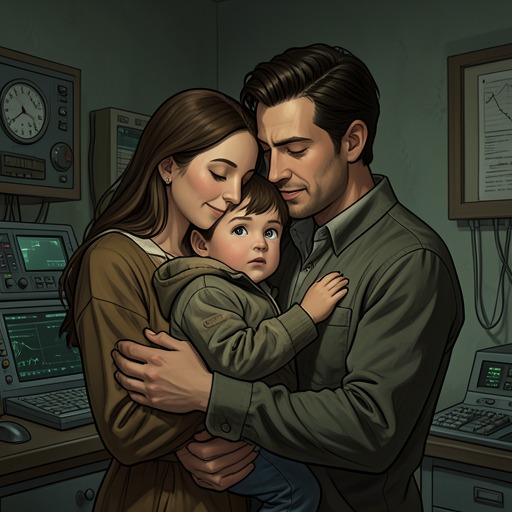
You are the bows from which your children as living arrows are sent forth
The ProphetThe expression “You are the bows from which your children as living arrows are sent forth” presents parenthood as a relationship of both connection and release. Parents help send children into a future beyond their own reach, while remaining part of the force that makes that departure possible. The bow-and-arrow image gives physical form to the passage’s insistence that care does not mean possession or likeness: the arrow must travel onward, and the bow must be able to let it go.
The Image of Bow and Arrow
The metaphor assigns parents and children different but interdependent roles. Parents are the bows: they provide the point from which the children’s movement begins and are acted upon in the process. Children are “living arrows,” not passive objects held in place. Their defining motion is outward, toward a destination that the image places on “the path of the infinite.” The expression therefore makes separation part of the relationship itself. The children’s departure is not described as a denial of their connection to their parents; it is the purpose toward which that connection contributes.
The contrast with an ordinary arrow matters. These arrows are alive, and their onward journey belongs to them. The image does not describe a parent as choosing a child’s final destination or keeping the child close. Instead, it locates the parent in the launching force and the child in the flight. That division of roles conveys a limit as well as a responsibility: a parent participates in a child’s beginning without owning the course that follows.
A Future That Moves Forward
The surrounding lines establish the image’s argument against trying to reproduce the past. They caution against making children like their parents and say that life neither goes backward nor waits with yesterday. The arrow’s forward flight makes that principle visible. Children belong to a life that continues beyond the forms and expectations of the previous generation; their movement is not a return to their parents’ past.
The reference to the infinite enlarges the scale of that movement. The mark lies upon a path beyond any small, immediate horizon, and the parent’s role is therefore set against a future that cannot be reduced to personal preference. The metaphor does not promise that parents can know precisely where their children will arrive. Its emphasis falls instead on sending them forth: the journey exceeds the parent’s view, even as the parent’s participation remains essential to its beginning.
The Archer and the Bow’s Bending
The image introduces a third figure, the archer, who sees the mark on the infinite path and bends the bow with might so that the arrows may go swiftly and far. The parent is thus not represented as the sole author of the child’s future. The archer supplies direction and force, while the bow is the instrument through which the arrows are launched. The passage leaves the archer identified by the pronoun “He,” placing this agency within the poem’s elevated, spiritual register without further defining it in these lines.
Bending is the bow’s necessary contribution, but it also names a kind of strain or yielding. The passage asks that this bending be accepted “for gladness,” recasting the bow’s alteration as part of a meaningful act rather than a failure or injury. The reason is built into the image: without the bow’s stable form and its capacity to bend, the arrow cannot be sent swiftly and far. The parent’s steadiness does not mean holding the child back; it enables departure.
Love in Both Directions
The closing comparison completes the expression’s account of separation. The archer loves the arrow that flies and also the bow that remains stable. The two objects are valued in different conditions: one in motion, the other held firm. Neither is treated as more worthy of love because of its position. The arrow’s distance does not cancel the bow’s importance, and the bow’s continued presence does not require the arrow to stay.
This final balance gives the metaphor its consoling force. The parent’s role is neither to freeze the child in dependence nor to disappear from the relationship once the child moves onward. The bow stays stable while accepting the bend that makes flight possible; the arrow travels while remaining linked to the act that sent it forth. Together, those images turn release into an expression of enduring connection and present parenthood as support for a future the parent cannot possess.